
-
Valve Categories
-






-
Valve Categories
-
Flanged Pinch Valve SJ41
DN
25~1200 (1"~48")
PN
0.6~1.6 (Class150)
Temperature Range
-35°C~125°C
Connection
Flanged
Installation Direction
Bidirectional
Design
SL/SJ41
Face to Face
DIN3202 F4, DIN3202 F5, GB/T12221, EN558-1, BS5163
Flange Drilling
GB/T9113, ASME B16.5, EN1092, GOST12820, GOST33259
Top Connection
ISO5211, GOST55510
Inspection
DIN3230, GB/T13927, ISO5028
Body Materials
GGG40, GGG50, WCB, Q235, CF8, CF8M
Frame Materials
GGG40, GGG50, WCB, Q235, CF8, CF8M
Stem Materials
420, F304, F316
Sleeve Materials
NR, NBR, HNBR, EPDM, CR, FPM, CSM, PU
Features & Benefits
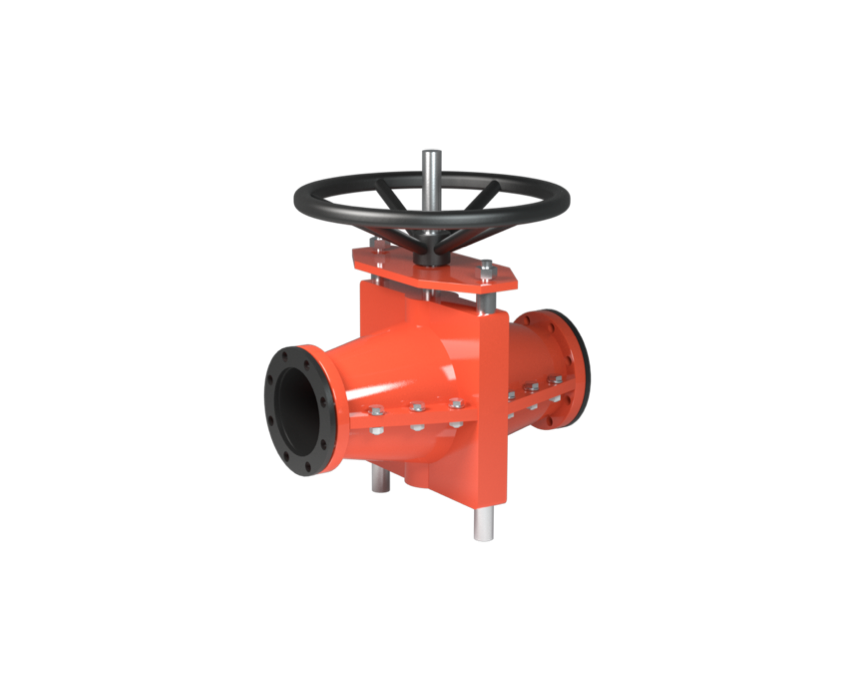
Seallon`s SJ41 pinch valves are designed for shut off and control applications, such as abrasive or corrosive pulps, slurries, powders or granular substances. The valve is full bore with no flow restrictions, during closing two pinch bars squeeze the rubber sleeve shut on the center line. Bubble tight shut-off is provided even if solids have built up on the sleeve wall.
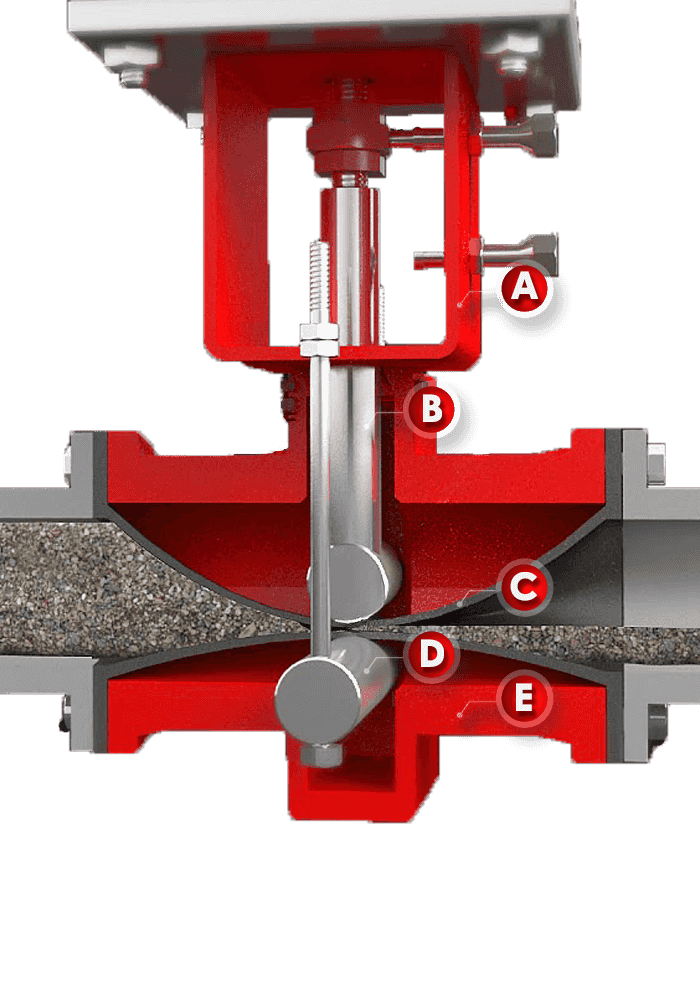
Yoke with platform under actuator, can be customized by ISO5210, GOST55510 or other standards.
The stem is often made from stainless steel or other high-strength materials to ensure durability and resistance to corrosion.
The rubber sleeve is made from materials such as natural rubber, EPDM, nitrile, or polyurethane, depending on the chemical compatibility and temperature requirements. It is flexible, resistant to abrasion, and offers good sealing properties. It is the key sealing element in a pinch valve. When the valve is closed, the sleeve is pinched to completely obstruct the flow of the media. It is responsible for providing a tight, leak-free seal, effectively isolating the flow in the pipeline.
The pinch mechanism usually consists of a set of rollers or plates, typically made of stainless steel or high-strength alloys, that compress the rubber sleeve. It is responsible for pinching the rubber sleeve to block or regulate the flow of the media. It can be operated manually, pneumatically, or hydraulically to adjust the pressure on the rubber sleeve, opening or closing the valve as needed.
The valve body is typically made from materials such as cast iron, steel, or aluminium, depending on the application and fluid being controlled. It is designed to withstand high pressure and provide a strong, durable structure.
Yoke with platform under actuator, can be customized by ISO5210, GOST55510 or other standards.
The stem is often made from stainless steel or other high-strength materials to ensure durability and resistance to corrosion.
The rubber sleeve is made from materials such as natural rubber, EPDM, nitrile, or polyurethane, depending on the chemical compatibility and temperature requirements. It is flexible, resistant to abrasion, and offers good sealing properties. It is the key sealing element in a pinch valve. When the valve is closed, the sleeve is pinched to completely obstruct the flow of the media. It is responsible for providing a tight, leak-free seal, effectively isolating the flow in the pipeline.
The pinch mechanism usually consists of a set of rollers or plates, typically made of stainless steel or high-strength alloys, that compress the rubber sleeve. It is responsible for pinching the rubber sleeve to block or regulate the flow of the media. It can be operated manually, pneumatically, or hydraulically to adjust the pressure on the rubber sleeve, opening or closing the valve as needed.
The valve body is typically made from materials such as cast iron, steel, or aluminium, depending on the application and fluid being controlled. It is designed to withstand high pressure and provide a strong, durable structure.
Industry Options
| Materials | Characteristics | Low Temp. ℃ | High Temp. ℃ | Recommended ℃ |
| NR | High elasticity | -20 | 85 | -5~70 |
| NBR | Oil resistivity | -30 | 100 | -15~90 |
| EPDM | Aging resistance, ozone resistance, corrosion resistance | -40 | 125 | -25~110 |
| HT EPDM | Aging resistance, ozone resistance, corrosion resistance, heat resistance | -40 | 150 | -25~135 |
| Wear-resistant | Excellent traction performance and wear resistance | -30 | 100 | -15~100 |
| CR | Oil, heat, flame, sunlight, ozone, acid and alkali resistance | -30 | 125 | -15~100 |
| Hypalon | Oxidation resistance, resistance to winding and cracking | -40 | 120 | -25~110 |
| FPM (Viton) | Chemical and most oils resistance, (except ketones & esters) | -20 | 200 | -5~150 |
| MVQ (Silicon) | High and low temperature resistance, oil, corrosion resistance | -55 | 200 | -30~180 |
| PU | Chemical, oil, wear, low temperature, aging resistance | -20 | 120 | -5~90 |
| PTFE | Heat, cold, acid, alkali, organic solvents resistant | -60 | 180 | -45~150 |
Dimensions
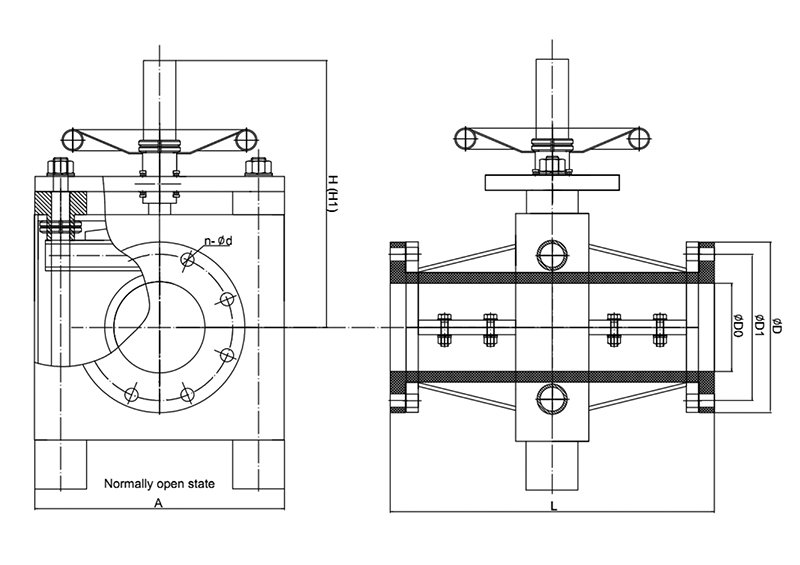
PN10
| DN | L | A | H | D | D1 | D0 | n-Φd |
| 25 | 150 | 220 | 240 | 115 | 85 | 25 | 4-14 |
| 32 | 180 | 220 | 259 | 140 | 100 | 30 | 4-18 |
| 40 | 195 | 220 | 259 | 150 | 110 | 35 | 4-18 |
| 50 | 195 | 220 | 259 | 165 | 125 | 45 | 4-18 |
| 65 | 230 | 260 | 288 | 185 | 145 | 60 | 8-18 |
| 80 | 280 | 308 | 320 | 200 | 160 | 76 | 8-18 |
| 100 | 360 | 350 | 353 | 220 | 180 | 95 | 8-18 |
| 125 | 445 | 390 | 400 | 250 | 210 | 120 | 8-18 |
| 150 | 500 | 435 | 449 | 285 | 240 | 148 | 8-22 |
| 200 | 560 | 510 | 513 | 340 | 295 | 195 | 8-22 |
| 250 | 630 | 610 | 621 | 395 | 350 | 245 | 12-22 |
| 300 | 730 | 700 | 695 | 445 | 400 | 295 | 12-22 |
| 350 | 890 | 790 | 790 | 505 | 460 | 345 | 16-22 |
| 400 | 1090 | 880 | 910 | 565 | 515 | 395 | 16-26 |
| 450 | 1120 | 946 | 1010 | 615 | 565 | 445 | 20-26 |
| 500 | 1240 | 1050 | 1070 | 670 | 520 | 495 | 20-26 |
Download
View 3D models → www.seallon.com → Product Pages → Closer Look
RELATED CASE
Submit An inquiry

© 2024 Seallon Flow Technology Co.,Ltd. All Rights Reserved