Research: What is the Cv value of the HVAC control valve related to?
The Cv value of an HVAC control valve (or any flow control valve) is a measure of the valve's capacity to pass a fluid, typically water, and is related to its flow characteristics. It is the flow rate of water (in gallons per minute, GPM) that will flow through the valve with a 1 psi (pound per square inch) pressure drop across the valve.
More specifically, the Cv value is related to the following factors:
1. Flow Rate: The higher the Cv value, the more fluid the valve can pass. For a given pressure drop, a higher Cv means the valve can handle a larger flow rate.
2. Pressure Drop: The Cv value assumes a 1 psi pressure drop. If the pressure drop across the valve is greater, the flow rate will be higher for a given Cv value.
3. Valve Sizing: The Cv value is used to select the appropriate valve size for an HVAC system. Proper valve sizing ensures that the valve can handle the required flow rate while maintaining desired pressure conditions in the system.
4. Type of Fluid: While the Cv value is often given for water, it can also be calculated for other fluids. However, for gases or non-water fluids, different factors such as density, viscosity, and compressibility are considered.
5. Valve Design: The shape, type (e.g., ball, globe, butterfly), and flow characteristics (e.g., linear, equal percentage, or quick opening) of the valve will influence its Cv value. For instance, globe valves tend to have a higher Cv compared to ball or butterfly valves.
Cv Calculation Formula:
The Cv value can be calculated using the following formula:
Cv = Flow Rate (GPM) / √(Pressure Drop (psi))Where:
Cv = Valve flow coefficient
Q = Flow rate (GPM)
Delta P = Pressure drop across the valve (psi)
This formula is used to size valves correctly in HVAC systems to ensure efficient control of water or other fluids, particularly in systems requiring precise regulation of flow.
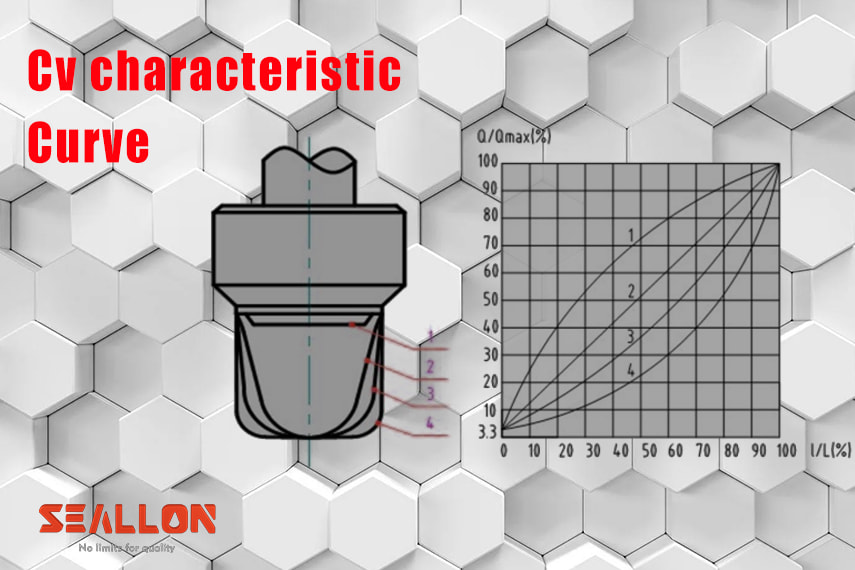
The inherent flow characteristics of the valve refer to the relationship between the relative flow rate of the medium flowing through the valve and the relative displacement (the relative opening of the valve) when the pressure difference between the valve and the valve remains unchanged.The inherent flow characteristics are mainly linear, equal percentage (logarithmic), parabolic and quick-opening characteristics.
- The fast-opening flow characteristic has a larger flow rate when the opening is small, and as the opening increases, the flow rate quickly reaches its maximum; after that, the opening is increased, and the flow rate changes very little.
- The linear flow characteristic refers to the linear relationship between the relative flow rate of the regulating valve and the relative displacement of the valve core, that is, the flow change caused by the change in unit displacement is constant.Valves with this characteristic have relatively large changes in flow during opening hours, high sensitivity, not easy to control, and even oscillate; when the opening is large, the relative change value of flow is small, the adjustment is slow, and it is not timely enough.
- The slope of the curve with equal percentage flow characteristics, that is, the magnification coefficient, increases with the increase of the stroke. Under the same stroke change value, the flow rate is small, and the flow rate changes little; when the flow rate is large, the flow rate changes greatly.
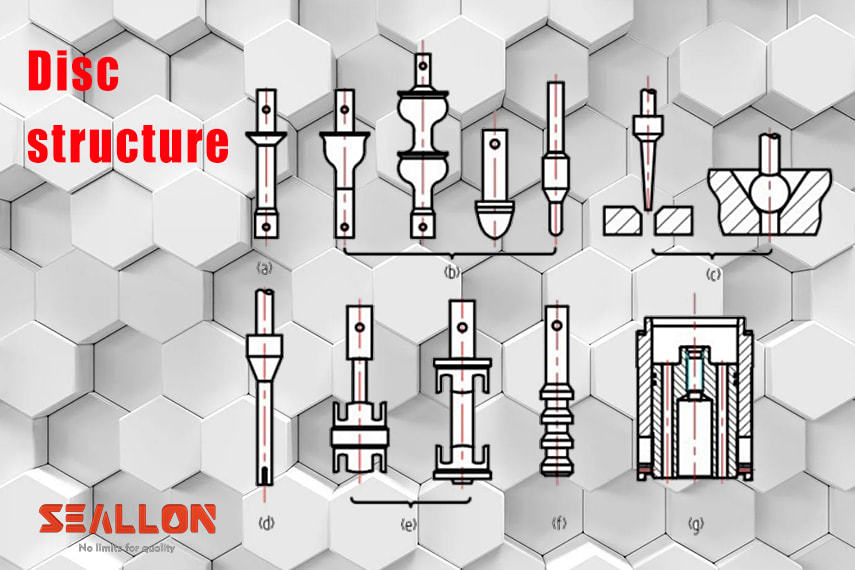
- The spool with equal percentage flow characteristics and linear flow characteristics are both plunger-shaped. The difference between the two is that the curved shape of the spool with equal percentage characteristics is fatter, and the curved shape of the spool with linear characteristics is thinner.
- The parabolic flow characteristic refers to the relative flow change caused by the change in the unit displacement of the valve stem. It is proportional to the square root of the relative flow value at this point. It is between the linear characteristic and the equal percentage characteristic curve. Relatively speaking, this characteristic is less used.