Research: What Flow Characteristics Do Butterfly Valves Have?
What Flow Characteristics Do Butterfly Valves Have?
When designing or optimizing a pipeline system, one of the most common questions engineers ask is:
"What flow characteristics do butterfly valves have?"Understanding the flow control behavior of butterfly valves is essential for valve selection, system efficiency, and accurate throttling in applications ranging from HVAC and water treatment to chemical processing and power generation.
What Are Flow Characteristics in Valves?
In valve terminology, flow characteristics describe how the flow rate (Q) changes in relation to the valve opening angle or travel position. This behavior is typically expressed through a Cv curve or percentage of maximum flow.
Flow Characteristics of Butterfly Valves
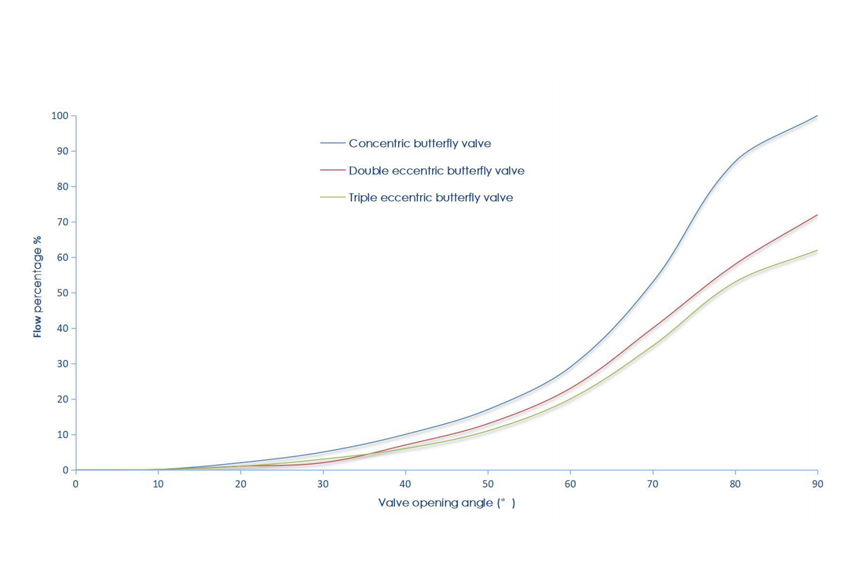
Butterfly valves exhibit a non-linear flow curve. Their inherent flow characteristic is often described as approximate linear up to 50% open, and quick-opening beyond that.
Typical Flow Profile:
0–20% open: Minimal flow due to disc obstruction
20–50% open: Flow increases in a near-linear fashion
50–90% open: Rapid increase — equal-percentage behavior
>90% open: Flow approaches maximum with little control
Butterfly Valve Cv Curve Example
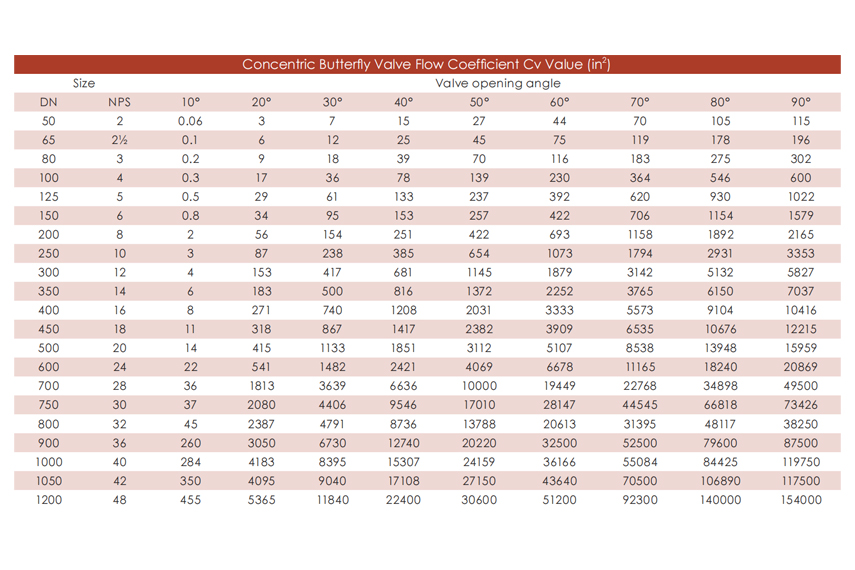
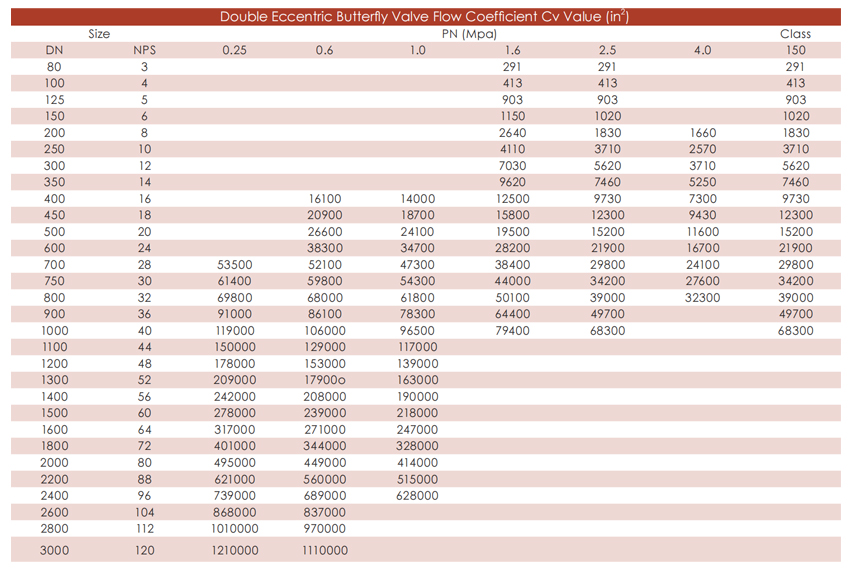
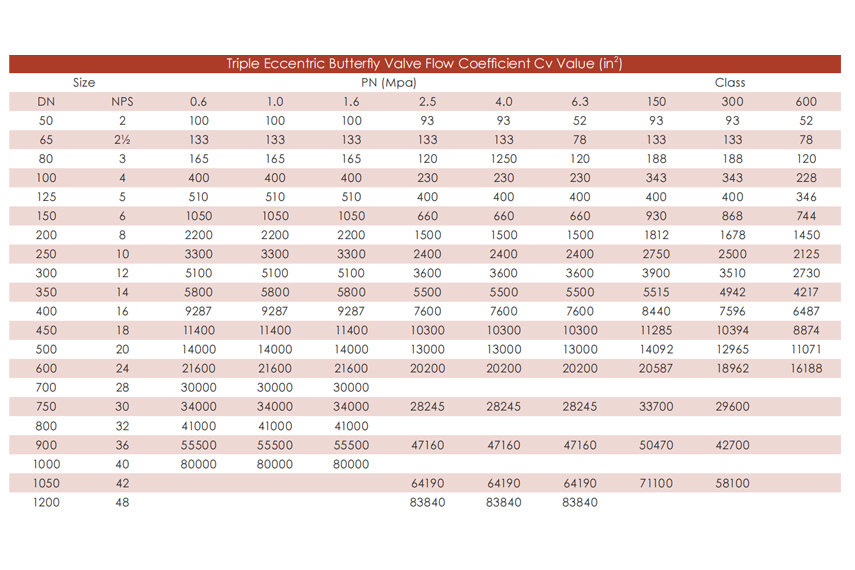
The Cv (flow coefficient) represents the flow capacity of the valve. It varies dramatically based on disc position.
Disc Angle (Degrees) % of Full Flow Flow Behavior 10° ~0.5% Minimal flow 30° ~15% Stable rise begins 60° ~65% Rapid acceleration 90° (Full Open) 100% Max flow, low resistance Inherent vs. Installed Flow Characteristics
Inherent Flow Characteristic: Based on valve design in ideal test conditions (no system resistance).
Installed Flow Characteristic: Actual performance when installed in a real piping system, affected by pipe friction, pressure drop, and turbulence.
Butterfly valves tend to show distorted flow curves under high system pressure drops, especially in large-diameter or throttled systems.
Flow Control Applications
While butterfly valves are often used as on/off isolation valves, they are also suitable for modulating control when:
Installed with a positioner and actuator
Applied within a stable flow range (30%–70%)
Designed with double-offset or triple-offset geometry