Research: Y-shaped filter mesh & millimeter comparison table
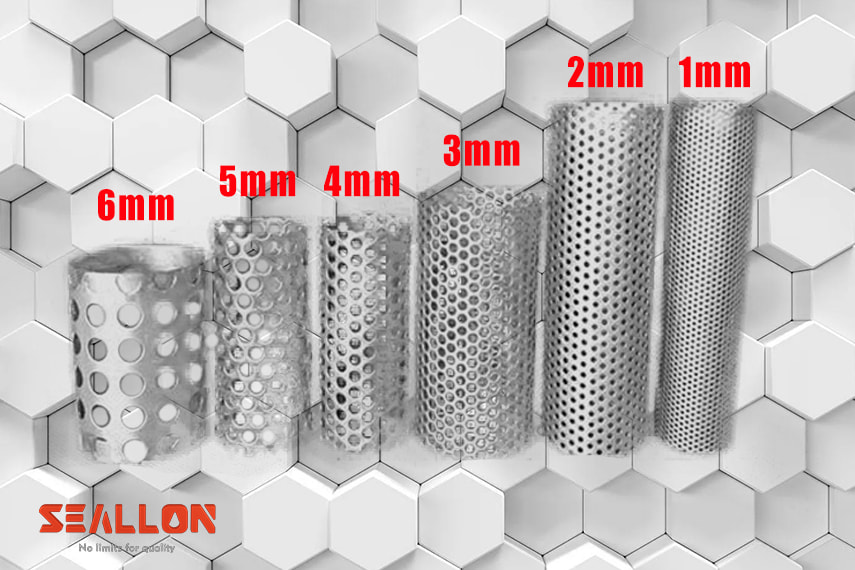
The so-called mesh number refers to the number of mesh holes in the sieve. The mesh size corresponds to the standard mesh number: 4.75mm mesh size: 4 mesh; 4.00mm mesh size: 5 mesh; 3.35mm mesh size: 6 mesh; 2.80mm mesh size: 7 mesh; 2.36mm mesh size: 8 mesh.
The so-called mesh number refers to the particle size or coarseness of the material. It is generally defined as the number of mesh holes in an area of 1 inch * 1 inch, that is, the number of mesh holes of the screen. The mesh hole through which the material can pass is defined as the mesh number: for example, 200 mesh means that the material can pass through a screen with 200 mesh holes in 1 inch * 1 inch. By analogy, the larger the mesh number, the finer the particle size of the material, and the smaller the mesh number, the larger the particle size of the material.
Sieve Size (mm) Standard Mesh Sieve Size (mm) Standard Mesh 2 10 0.212 70 1.7 12 0.18 80 1.4 14 0.15 100 1.18 16 0.125 120 1 18 0.106 140 0.85 20 0.09 170 0.71 25 0.075 200 0.6 30 0.063 230 0.5 35 0.053 270 0.425 40 0.045 325 0.355 45 0.04 400 0.3 50 0.013 500 0.25 60